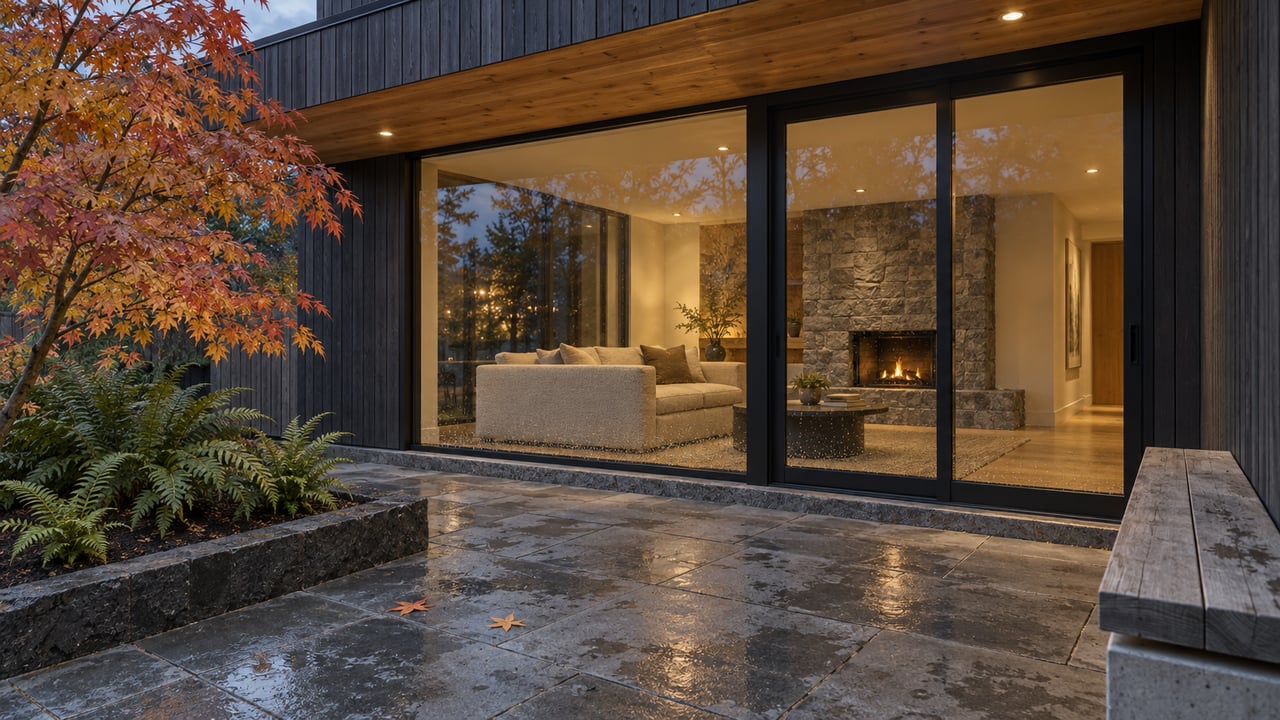
Two Bellevue addresses. Same train line. Same travel time to Seattle. One sits three blocks from a station where a former car dealership site has a project in permitting for an eleven-story building with roughly 450 apartments. The other sits three blocks from a station where the city's own planning documents say, in writing, that nothing is going to change.
That is the split running through Bellevue's housing market right now, and it has nothing to do with which side of the line has better schools or a nicer lake view. It has to do with zoning maps drawn years before the first train ever ran.
What Actually Opened This Spring
Sound Transit's 2 Line, the rail project most people still call East Link, has been arriving in pieces for two years. The first Eastside segment opened in April 2024, running from South Bellevue to Redmond Technology Station with stops at East Main, Downtown Bellevue, Wilburton, Spring District, and BelRed. The line reached Downtown Redmond in May 2025. The piece everyone had been waiting on, the crossing over Lake Washington into Seattle, finally opened on March 28, 2026, according to the City of Bellevue's own transportation project page. That is six months old as of this writing, which makes it the freshest infrastructure change in the local market, not old news dressed up as current.
So the full picture is finally visible. Every Bellevue station has now had real service for months, some for two full years. That is enough time to see which neighborhoods around those stations actually changed and which ones didn't move at all.
The Development Gap the Map Doesn't Show
Bellevue has six 2 Line stations inside city limits. Reporting from The Urbanist's coverage of transit-oriented development around the line found millions of square feet of office space and tens of thousands of housing units built or in the pipeline around Downtown Bellevue, the Spring District, BelRed, Overlake, and Redmond Technology. East Main, South Bellevue, and Wilburton were, in that same reporting, the stations sitting out the wave, either because nothing had broken ground yet or because nothing was even in permitting.
The reason isn't mysterious. It's written into Bellevue's own planning language. The city's station area planning page states plainly that there is no transit-oriented development potential west of the East Main station or anywhere around the South Bellevue station, because of established city policy preserving those single-family neighborhoods. That is not a market failure or a missed opportunity. It is the zoning working exactly as designed.
Here is what that looks like station by station, based on the most current information available:
| Station | Zoning context | What's actually happening nearby |
|---|---|---|
| Spring District/120th | Built from the ground up as transit-oriented development | New office towers now house tenants including Snowflake, Uber, and Databricks, alongside new housing and retail |
| BelRed/130th | Upzoned under the city's BelRed Corridor Plan | Former warehouses and light-industrial lots converting to apartments and retail |
| Bellevue Downtown | High-rise core with no meaningful height cap | Condo towers pricing from roughly $874,000 for a one-bedroom to $1.65 million for a two-bedroom as of mid-2026 |
| Wilburton | Comprehensive Plan updated in 2024, land-use code changes followed in 2025 | A former Auto Row parcel is in permitting for an eleven-story building with roughly 450 apartments; zoning could eventually allow towers as tall as 30 stories |
| East Main | Large-lot single-family zoning preserved, disjointed street grid | No major project has broken ground; a 4.2-million-square-foot proposal near two hotels remains unbuilt years after being announced |
| South Bellevue | Established single-family zoning in Enatai, bordering the separately incorporated town of Beaux Arts Village | The city's 2016 station area plan calls only for pedestrian and bicycle improvements, with no land use changes |
Read across that table and the pattern is obvious. Some stations with upzoning got towers, corporate tenants, and new construction; Wilburton has the zoning changes but not yet the finished buildout. The stations without it got a train platform and not much else.
Where the Money Actually Moved
Spring District is the clearest example of what zoning-enabled redevelopment looks like in practice. Originally planned around a single anchor tenant, the district has since diversified, with Snowflake occupying office space, Uber and Databricks filling newer towers, and new housing built alongside the offices rather than added on afterward. BelRed followed a similar arc, converting former warehouse and light-industrial land into apartments and retail under a corridor plan the city adopted years before the trains arrived.
Wilburton is the interesting one to watch right now, because it is mid-transition. For years it was known mainly for Auto Row, the string of car dealerships that still sit within a quarter mile of the station. The city changed the Comprehensive Plan for the area in 2024 and followed with land-use code changes in 2025. Current permit records for one project on a former dealership site list between 449 and 452 dwelling units, though the project remains under review rather than approved. If that zoning shift holds, Wilburton is the station most likely to look like Spring District in five years. If it doesn't, it stays closer to East Main.
Downtown Bellevue never needed a zoning change to benefit. It was already a high-rise core, and the station simply reinforced demand that was already there, with condo pricing now running from roughly $874,000 for a one-bedroom to $1.65 million for a two-bedroom as of mid-2026.
Enatai and Beaux Arts Village Aren't Losing. They're Playing a Different Game
It would be easy to read the South Bellevue and East Main story as a market disadvantage. It isn't. Enatai, the single-family neighborhood that surrounds the South Bellevue station, developed in the 1950s and 1960s with winding streets designed specifically to discourage through traffic. The city's own 2016 plan for that station area confirms there are no land use changes coming to the neighborhood, only pedestrian and bicycle improvements. Just west of the station sits Beaux Arts Village, a separately incorporated town of roughly 300 residents that is not part of Bellevue at all and has its own long history of resisting development.
These neighborhoods hold value because they are established, low-density, lake-adjacent enclaves with limited inventory, not because a train happens to stop nearby. That is a real and durable kind of appreciation. It's just a different mechanism than the one driving prices in the Spring District or BelRed, and conflating the two leads buyers to overpay for proximity to a station that will never look different than it does today, or underpay for a station area that is one zoning vote away from a very different future.
What This Means If You're Comparing Bellevue Addresses
Bellevue's overall market has cooled slightly from its peak intensity. The average house price came in around $1.5 million as of August 2026, down about 2 percent from a year earlier, and the $1.4 million to $2 million single-family segment, still the most active price band in the city, has seen months of supply rise to roughly 4.5, up from near-zero conditions earlier in the year. That loosening gives buyers more room to ask the right questions instead of racing a deadline.
The Federal Reserve held its benchmark rate at 3.50 to 3.75 percent at its July 2026 meeting, the fifth consecutive hold, though three regional presidents dissented in favor of a hike. That steadiness, combined with slightly higher inventory, means the pace of appreciation is likely to moderate through the rest of 2026 rather than accelerate the way it did in the early part of the year.
None of that changes the zoning story. If you're looking at a listing near a Bellevue light rail station, the question that actually matters isn't how many minutes to the platform. It's whether that station sits inside an area the city has already committed to redeveloping, or inside a neighborhood the city has already committed to leaving alone. Both are legitimate places to buy. They just compound differently, and knowing which one you're standing in before you write an offer is worth more than any walk score.
A Few Direct Questions
Does every home near a Bellevue light rail station cost more than it did two years ago? Not uniformly. Condo values near stations in upzoned areas like Downtown Bellevue and Wilburton have outperformed the broader condo market since the extension opened, while single-family neighborhoods near stations in protected zones, like Enatai, have moved on their own separate track tied to lake proximity and lot scarcity rather than transit access.
Is Wilburton a safe bet for future appreciation? It's the station in the most active transition. The Comprehensive Plan and code changes are already adopted, and one major project is in permitting with a permit-listed range of 449 to 452 units. The upside case is real, but it isn't finished, and a buyer choosing Wilburton today is buying into a plan more than a finished product.
Will South Bellevue or East Main ever get the same development wave? Based on the city's own current station area planning documents, no land use changes are planned for either area. Any shift would require a change in city policy or new state-level requirements around transit-adjacent density, neither of which has happened yet.
If you're trying to figure out which Bellevue station area actually matches what you're looking for, whether that's ground-floor access to new construction and rising density or the quiet, unchanging character of an established enclave, Brian Hawkins and Cyrus O'Bryant can walk the specific block with you before you write an offer. And if you already own in one of these neighborhoods and want to know what six months of full 2 Line service has actually done to your home's value, request your free home valuation and get a number grounded in your address, not a citywide average.