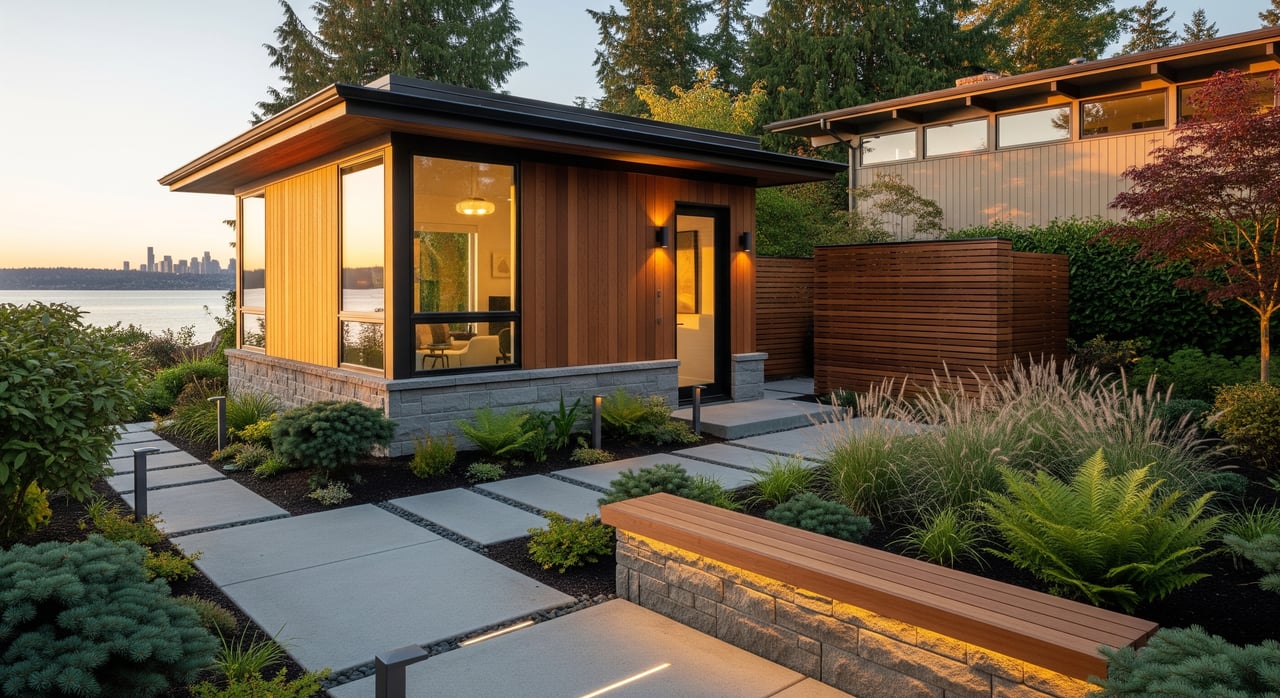
Thinking about adding an accessory dwelling unit to your Kirkland property? You are not alone. Homeowners across the Eastside are exploring ADUs to create rental income, support multigenerational living, or boost long-term value. In this guide, you will get a plain-English overview of ADUs in Kirkland, realistic costs and timelines, what to verify before you spend money, and a step-by-step plan to move forward with confidence. Let’s dive in.
What an ADU is in Kirkland
An accessory dwelling unit is a smaller, self-contained home on the same lot as your primary residence. It has its own entrance and typically includes a kitchen or kitchenette, bathroom, and sleeping area. ADUs come in several forms:
- Internal ADU: a converted basement or attic inside your existing home.
- Attached ADU: an addition connected to the main house or an attached garage conversion.
- Detached ADU (DADU): a separate new structure, often in the backyard, or a unit above a detached garage.
Homeowners look at ADUs for rental income, flexible space for family, and added utility. The tradeoffs are straightforward: upfront cost and permitting, potential utility upgrades, and ongoing maintenance.
Top considerations before you start
Before you call a contractor, ground yourself in three basics that shape feasibility and budget.
- Zoning and lot feasibility. ADUs are generally allowed in single-family zones in Kirkland, but each parcel is different. Confirm zoning, setbacks, height limits, lot coverage, and any critical areas with the City of Kirkland Permit Center.
- Cost and timeline. Interior conversions are usually the lowest cost and quickest to build. Detached units cost more and take longer, but can offer privacy and stronger rental potential. Plan for contingencies.
- Rental and occupancy rules. Owner-occupancy and short-term rental policies evolve. Verify the City’s current rules on who must live on site and whether short-term rentals are allowed or require registration.
Where ADUs are allowed and basic rules
Local codes change, so always confirm the current standards with the City of Kirkland. Use the points below as an orientation checklist.
Zoning and allowed locations
Most single-family residential zones in Kirkland allow ADUs. Confirm your parcel’s zoning and any special overlays with the City’s planning staff or online zoning tools.
Size limits and height
Many cities use maximum floor area standards for ADUs. Detached units often cap around 800 to 1,000 square feet, while interior ADUs may be limited differently. Height limits for accessory structures also apply. Verify the current caps and height rules with the City.
Setbacks and lot coverage
Detached ADUs must meet side and rear yard setbacks and comply with lot coverage and impervious surface rules. Lot shape, slopes, and easements can influence what fits.
Owner occupancy and rental policies
Some jurisdictions require the owner to live on the property when renting an ADU, and many regulate short-term rentals. Check Kirkland’s current policies and any registration requirements before you plan your income strategy.
Parking requirements
Cities may require one additional off-street stall for an ADU, but parking can be waived when a property is near frequent transit or has sufficient existing parking. Confirm the rule that applies to your address.
Utilities and connections
New plumbing and mechanical systems trigger plumbing, mechanical, and electrical permits. Detached units often need an electrical service upgrade. Water and sewer capacity and connection points are reviewed at permit intake. If a property uses septic, additional health department review may be required.
Special areas and HOAs
If you are in a shoreline or critical area, or within an HOA, additional restrictions can apply. Review covenants and talk with your HOA board in addition to the City.
Permits, inspections, and fees
Most ADUs need a building permit, and may also require plumbing, mechanical, electrical, grading, or demolition permits. Plan for plan review, standard inspections during construction, and potential impact or system development charges tied to utilities. Some cities reduce certain fees for ADUs. Confirm the latest Kirkland fee schedule.
Realistic costs on the Eastside
Actual costs depend on design, site conditions, and market pricing, but these ranges reflect common outcomes in the Seattle metro.
- Interior conversion: about $50,000 to $200,000 depending on egress, kitchen and bath scope, insulation, and mechanical upgrades.
- Attached ADU or attached garage conversion: about $75,000 to $250,000.
- Detached new-build ADU: about $150,000 to $450,000 or more, depending on size, foundation type, utilities, and finishes.
Add a 10 to 25 percent contingency to handle surprises such as utility conflicts or required seismic upgrades. Major cost drivers include square footage, foundation work, site access, energy code requirements, and local labor conditions. Permit, connection, and stormwater costs can also influence the budget.
Timeline from idea to move-in
Your schedule depends on scope, design readiness, and permit queues. Plan for the stages below.
- Planning and early design: 2 to 8 weeks for concepts, zoning checks, and a rough site fit.
- Detailed design and permit prep: 2 to 8+ weeks for drawings and structural details, faster for simple conversions.
- Permit review and issuance: often 4 to 12+ weeks depending on completeness and any corrections.
- Construction: 2 to 6 months for most interior or attached ADUs; 4 to 12 months for detached units.
From decision to occupancy, 4 to 18 months is common. A complete permit package and early pre-application with the City can shorten the path.
Financing options to explore
Most homeowners fund ADUs with one or more of the following:
- Home equity loan or HELOC
- Cash-out refinance
- Construction loan with a take-out refinance on completion
- Personal savings or contractor-arranged financing
Some public or nonprofit programs occasionally pilot ADU lending or incentives. Check regional housing resources and King County programs to see what is available when you are ready to build.
Rental income and ROI basics
ADU rental income varies by unit size, finishes, location, and whether utilities are included. One-bedroom ADUs typically command higher rent than studios. To evaluate ROI, run a simple pro forma before you design:
- Estimate project cost, expected rent, vacancy, utilities, management, and maintenance.
- Add loan costs if you plan to finance, plus reserves for repairs.
- Confirm owner-occupancy and short-term rental rules that affect your revenue plan.
Adding living area or a rentable unit can increase assessed value and property taxes. For tax impacts, consult the King County Assessor and a tax professional.
Common questions, straight answers
Is my lot eligible for an ADU?
Start with a zoning and parcel check through the City of Kirkland. Look for constraints like critical areas, easements, setbacks, lot coverage, and HOA rules. A quick pre-application discussion with the Permit Center can flag major issues.
Which ADU type is most cost-effective?
Interior conversions are usually the least expensive and fastest. Detached ADUs cost more but can deliver privacy and stronger rental potential. Your site, access, and utility setup often drive the best choice.
Do I have to live on the property to rent the ADU?
Owner-occupancy rules vary and do change. Confirm the current Kirkland standard before you plan long-term leasing.
Can I use an ADU for short-term rentals?
Policies vary by city and can include registration. Verify whether Kirkland allows short-term rentals in ADUs and under what conditions.
Will an ADU change my insurance or taxes?
Adding a separate dwelling can affect homeowners and landlord insurance needs. Check with your insurer. For taxes, contact the King County Assessor to understand potential changes to assessed value and your annual bill.
Do I need an architect?
Smaller interior conversions may proceed with contractor-prepared plans. Detached ADUs and structural work often require a licensed architect or engineer for code compliance. The Permit Center can clarify submittal requirements.
Practical next steps for Kirkland owners
Use this plan to move from idea to action without costly missteps.
- Verify zoning for your parcel with the City of Kirkland. Confirm whether ADUs are permitted and which types are allowed.
- Check lot constraints: setbacks, height, lot coverage, critical areas, and easements. Note any HOA or historic restrictions.
- Schedule an informal pre-application conversation with the Permit Center to identify major hurdles early.
- Get at least two initial cost estimates from local contractors experienced with ADUs. Compare interior, attached, and detached options.
- Run a simple pro forma with conservative rent, a vacancy allowance, utilities, and financing costs.
- Decide your path, hire a designer if needed, and prepare a complete permit package to reduce review time.
Printable ADU checklist
- Confirm zoning and permitted ADU types for your parcel
- Check setbacks, lot coverage, critical areas, and easements
- Review HOA or historic district constraints
- Choose ADU type: interior, attached, or detached
- Get 2 to 3 initial contractor estimates
- Check likely sewer, water, and electrical needs
- Contact the City of Kirkland Permit Center for pre-application
- Hire designer or architect if needed and prepare drawings
- Submit permit application and pay required fees
- Explore financing options: HELOC, refinance, or construction loan
- Estimate rent and operating costs, including vacancy
- Check King County Assessor for potential tax impact
- Schedule inspections and monitor compliance during construction
- Update insurance and plan for leasing or move-in
Where to verify details
- City of Kirkland Permit Center and Planning Division for zoning, permits, fees, and current ADU rules.
- King County Assessor for tax and assessment guidance.
- Washington State Department of Commerce ADU resources for statewide context.
- Licensed architects, designers, and general contractors with ADU experience for site-specific design and costs.
How Hawkins & O’Bryant can help
If you are weighing an ADU as part of your broader real estate plan, you deserve clear, local guidance. Our team can help you understand how an ADU might influence resale value, buyer appeal, and timing if you plan to sell in the next few years. We also help Eastside buyers spot homes that are ADU-ready and coordinate resources so your project aligns with your move and financing strategy. When you want a calm, senior-level perspective on value, marketability, and timing, we are here.
Ready to explore your options or discuss the potential impact of an ADU on your home’s value? Reach out to Hawkins & O'Bryant for local, consultative guidance.
FAQs
What is an ADU and how does it work in Kirkland?
- An ADU is a self-contained home on the same lot as a primary residence, and in Kirkland it is generally allowed in single-family zones subject to size, setback, height, and utility rules confirmed with the City.
How much does a detached ADU typically cost near Kirkland?
- Detached ADUs commonly range from about $150,000 to $450,000 or more depending on size, utilities, site work, and finishes, with a 10 to 25 percent contingency recommended.
How long do ADU permits and construction take in Kirkland?
- Planning and design often take 4 to 16 weeks, permit review 4 to 12+ weeks, and construction 2 to 6 months for conversions or 4 to 12 months for detached units.
Are short-term rentals allowed in a Kirkland ADU?
- Policies change, so confirm current short-term rental rules and any registration requirements with the City before listing an ADU for short stays.
Do I need to live on site to rent out my ADU?
- Owner-occupancy requirements vary by jurisdiction and can change, so verify Kirkland’s current rule with the Permit Center.
Will building an ADU raise my property taxes in King County?
- Adding living area or a rentable unit can increase assessed value and taxes; contact the King County Assessor to understand potential impacts for your property.