Thinking about a Camano Island home with water in your daily view, but not sure whether true waterfront or near‑water living is the better fit? You are not alone. Buyers and sellers in 98282 often weigh price, risk, permits, and lifestyle in different ways. This guide lays out the key differences so you can make a confident move. Let’s dive in.
What “waterfront” and “near‑water” mean here
Waterfront defined
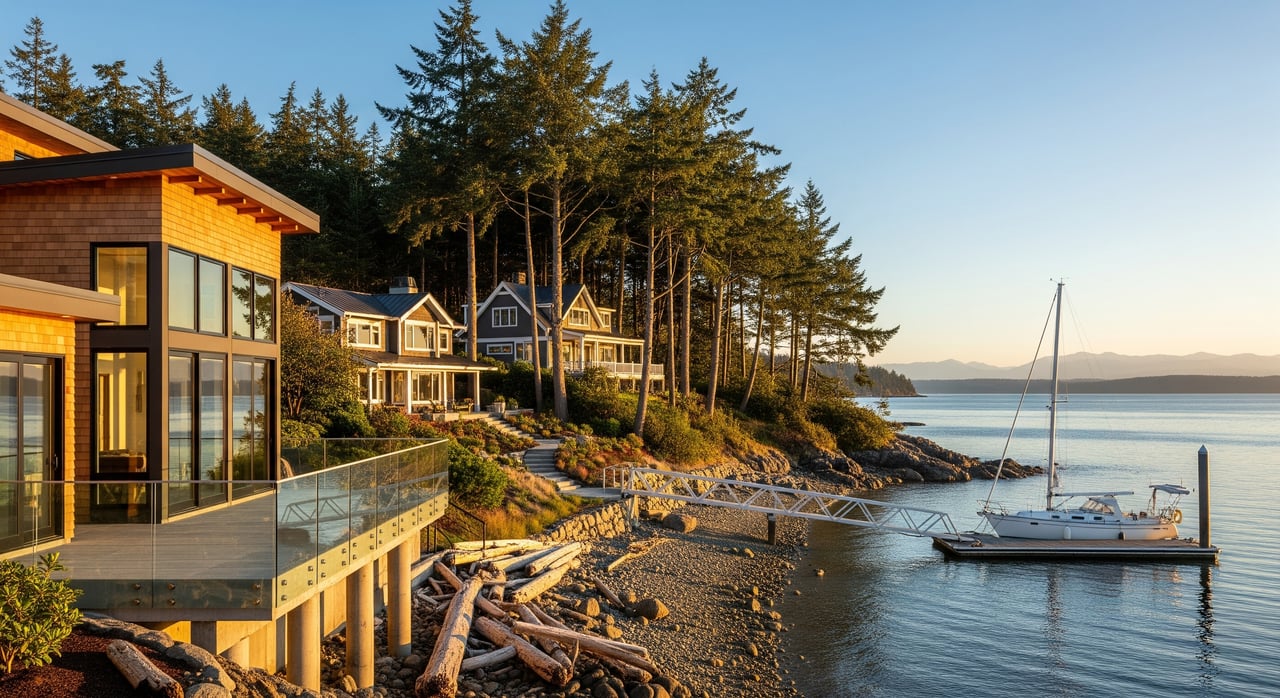
Waterfront on Camano Island means a parcel with direct legal access to Puget Sound. That can include beachfront with tidelands access, a private dock or float, or a deeded water frontage. You control your access point, subject to local and state rules.
Near‑water defined
Near‑water homes sit a short walk or drive from the shore. You might enjoy wide views and use a community beach, easement, or public access for the water. You do not have direct, private frontage or the same rights tied to tidelands.
Market realities in 98282
Waterfront homes typically command a premium because of scarcity, uninterrupted views, and private access. The size of that premium shifts with view quality, condition, location, and market cycle. To measure it for your area of Camano, compare recent waterfront sales against similar non‑water or near‑water homes using local NWMLS comps and Island County Assessor data.
What drives price gaps
- View quality and orientation, including sunsets and wide channel exposure.
- Condition of shoreline elements such as bulkheads, docks, and decks.
- Age and condition of septic, foundation, drainage, and roofs exposed to salt air.
- Access and utilities, including year‑round road access, parking, water, and broadband.
- Daily convenience to Stanwood, I‑5, and WA‑532 for commuting and services.
Liquidity and resale
Waterfront attracts a passionate but smaller buyer pool at higher price points, which can mean more time on market in some cycles. Near‑water homes appeal to a broader set of buyers, especially those who value easier access, lower maintenance, and strong views without direct frontage. For sellers, pricing should balance the lifestyle premium with real costs buyers will factor in, like insurance, septic status, and any shoreline work needed.
Permits, rules, and what you can change
Waterfront living on Camano involves more regulation than most inland properties. Island County administers the Shoreline Master Program under Washington’s Shoreline Management Act. Projects that affect the shoreline may require county shoreline permits, and some rise to a Shoreline Substantial Development Permit.
Certain work triggers additional approvals. Many in‑water or near‑water projects need a Washington Department of Fish and Wildlife Hydraulic Project Approval. Some projects also require authorization from the U.S. Army Corps of Engineers under federal law. Structures in navigable waters and work affecting wetlands are closely reviewed.
Commonly regulated items include docks and floats, shoreline armoring like seawalls and bulkheads, vegetation removal, and grading near bluffs. New or expanded armoring is often restricted because of habitat impacts, and soft stabilization is frequently preferred. Timelines range from weeks to many months depending on scope, required studies, and coordination among agencies. Budget for engineering, geotechnical reports, and mitigation when planning improvements.
Risks, insurance, and maintenance to plan for
Waterfront‑specific risks in Puget Sound
- Tidal flooding and storm surge can affect low‑lying beachfront parcels. Check FEMA Flood Insurance Rate Maps to see if a property sits in a Special Flood Hazard Area.
- Bluff erosion and slope instability can follow heavy rains or be influenced by nearby armoring. A geotechnical assessment helps clarify risk for bluff‑top homes.
- Salt air accelerates corrosion and wear on metals, fasteners, HVAC units, roofing, and decks.
- Moisture and marine wood borers can affect structures close to the water or with inadequate drainage.
- Environmental restrictions may limit hard armoring, which can leave owners relying on softer stabilization methods or accepting some shoreline change over time.
Insurance and finance
- Home insurance near the coast can carry higher premiums or exclusions, depending on the carrier.
- If a home is in a Special Flood Hazard Area and you use a mortgage, National Flood Insurance Program coverage is usually required by the lender. Outside an SFHA, some lenders still require flood insurance.
- Lenders may ask for an elevation certificate to assess flood risk and set conditions for the loan.
- Get homeowners and flood insurance quotes early in your process to avoid surprises.
Maintenance basics
- Schedule regular inspections of foundation, drainage, roof, windows, and decks exposed to salt air.
- Stay current on septic maintenance and pumpouts. Failing systems can be costly and may affect the ability to sell or remodel.
- For docks or floats, plan for periodic replacement of piles, floats, and hardware by specialized contractors.
Lifestyle and convenience tradeoffs
Waterfront living gives you instant access to activities like kayaking, beachcombing, clamming where allowed, and watching marine wildlife. In summer, you may notice more boat noise or visitor activity near public beaches. Near‑water living often means similar views and quick beach access with fewer regulatory constraints and lower maintenance.
Camano Island offers a unique setup for daily life. The causeway connection means no ferry is required. Many residents commute through the WA‑532 and I‑5 corridors, and locations closer to those routes can be practical for regular trips to services or work. State parks and beaches, including well‑known destinations like Cama Beach State Park, add seasonal energy and recreation that many residents enjoy.
Buyer checklists
If you want waterfront
- Review FEMA flood maps and confirm the property’s flood zone. If needed, obtain an elevation certificate.
- Order a geotechnical report for bluff‑top sites to assess slope stability and erosion.
- Verify condition and permitting history for bulkheads, seawalls, riprap, docks, and floats.
- Confirm legal rights to tidelands and any public or private access easements.
- Get early quotes for homeowners and flood insurance, including any specialty coverage.
- Inspect septic and well records. Budget for upgrades if systems are older or near end of life.
- Research feasibility and permits for any improvements you want before you close.
If you want near‑water
- Confirm how you access the water: deeded right‑of‑way, community beach, public access, or view only.
- Compare commute times and proximity to services, schools, and shopping.
- Verify water, sewer or septic, and broadband options for the specific address.
- Check whether view corridors are protected or if future development could change them.
Seller tips for maximizing value
- Disclose known shoreline issues, past permits, and any recorded easements or covenants.
- Share maintenance records for docks, seawalls, septic, roof, and major systems to build buyer confidence.
- Consider pre‑sale inspections or reports, such as septic, geotechnical, or an elevation certificate.
- Price with precision. Balance the lifestyle premium with practical buyer concerns like insurance, flood zone, and the condition of shoreline elements.
How Hawkins & O’Bryant helps
You deserve calm, senior‑level guidance as you evaluate waterfront versus near‑water options on Camano. Hawkins & O’Bryant brings a white‑glove, consultative approach backed by rigorous pricing analysis through local comps and premium marketing resources from The Agency. For sellers, that means clear strategy, elevated presentation, and wide exposure to qualified buyers. For buyers, it means steady advocacy, disciplined due diligence, and clean, well‑managed transactions.
If you are weighing lifestyle priorities against cost, risk, and long‑term value, let’s talk through your goals and map a smart path forward. Start a conversation with Hawkins & O'Bryant.
FAQs
Do waterfront homes on Camano always appreciate more?
- Not always; while waterfront often sells at higher prices, appreciation depends on condition, location, and market cycle, and higher carrying costs and liquidity can affect net returns.
Can you build a private dock on Camano Island?
- Possibly; docks and floats usually require county shoreline permits, a state Hydraulic Project Approval, and sometimes federal authorization, with timelines that can run many months.
Is flood insurance required for Camano waterfront homes?
- If the home is in a FEMA Special Flood Hazard Area and you finance the purchase, lenders generally require National Flood Insurance Program coverage; outside an SFHA, requirements vary by lender and carrier.
Are new seawalls allowed on Camano Island?
- New or expanded armoring is often restricted and may require mitigation; soft stabilization is commonly preferred and all options are subject to environmental review and permits.
What should you know about septic near the beach on Camano?
- Island County enforces strict septic rules near shorelines; failing or undersized systems can limit permits or sales and usually must be repaired or replaced before proceeding.