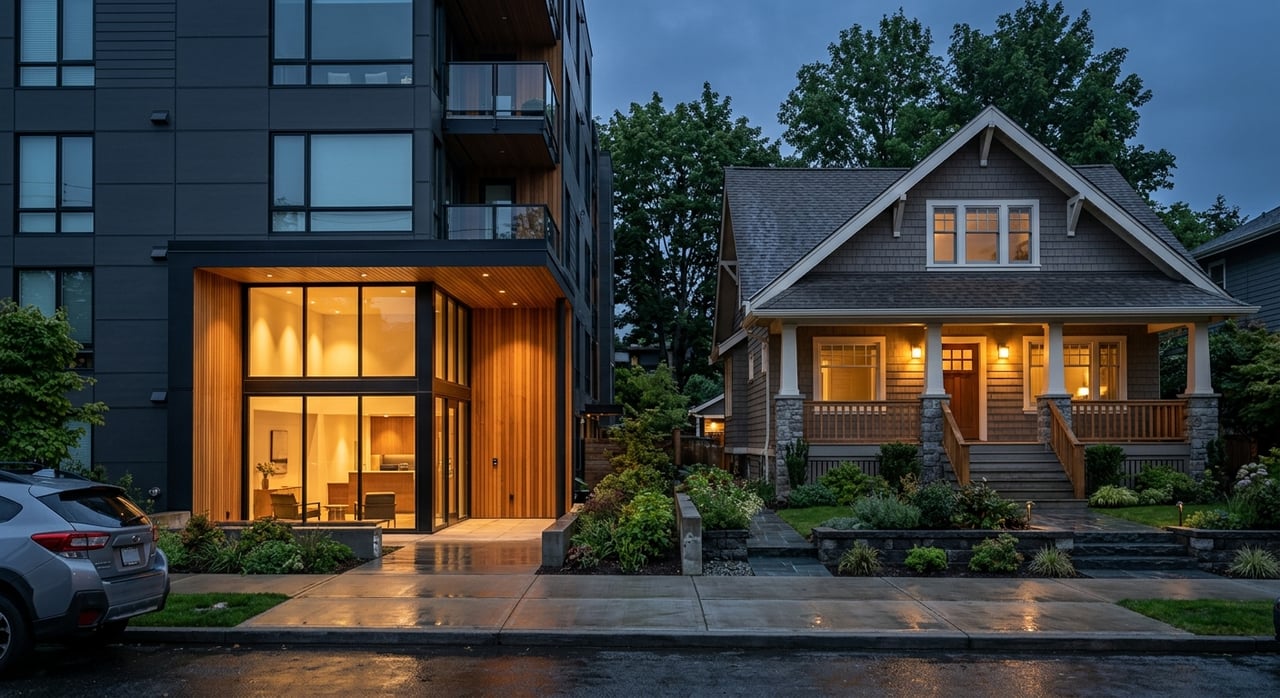
Buying in Bellevue often starts with one big question: should you choose a condo or a single-family home? It is a smart question, because Bellevue offers both high-rise living near transit and established neighborhoods with more detached homes. If you are weighing price, upkeep, commute, and lifestyle, this guide will help you compare your options with Bellevue-specific context. Let’s dive in.
Why Bellevue Makes This Choice Different
Bellevue is not a one-size-fits-all housing market. The city’s planning approach supports denser mixed-use growth in places like Downtown Bellevue and BelRed while preserving distinct neighborhood character in other areas.
That means your best fit often depends on where you want to live as much as what you want to buy. A condo may feel like the natural choice near Downtown Bellevue, while a single-family home may align better with areas like Bridle Trails, Somerset, or Northwest Bellevue.
Bellevue Price Differences
For many buyers, price is the first filter. Current market snapshots show Bellevue condos listed around a median price of about $646,000, while Bellevue’s broader home market sits around a $1.5 million median sale price and about a $1.60 million median listing price.
That gap matters. If you want to enter the Bellevue market at a lower price point, a condo may open more doors, especially in central, transit-served locations.
Detached-home pricing varies by neighborhood. Recent neighborhood snapshots show Somerset around $1.94 million, Bridle Trails around $1.49 million, Newport around $1.34 million, and Woodridge around $749,000.
The takeaway is simple: condos are often the lower entry point, but Bellevue houses range widely depending on neighborhood and lot characteristics. Your budget may naturally narrow your options before lifestyle factors even come into play.
Condo Living in Bellevue
A condo in Bellevue can be a strong fit if you want convenience and a more low-maintenance setup. In Washington, condo ownership usually means you own your individual unit while sharing ownership of common elements through the association.
That structure often reduces your exterior maintenance responsibilities. You are typically not handling yard work, roof replacement for the building, or many shared-area tasks on your own.
This can be especially appealing in Bellevue’s urban and mixed-use areas. Downtown Bellevue, BelRed, Wilburton, and station-area locations stand out for buyers who want a more connected, lock-and-leave lifestyle.
Condo Pros
- Lower typical entry price than many Bellevue single-family homes
- Less exterior upkeep and yard maintenance
- Strong fit near Downtown Bellevue and rail-served areas
- Often appealing for buyers who value walkability and transit access
Condo Tradeoffs
- Monthly dues are part of ownership costs
- Association budgets can change over time
- Reserve strength matters because weak reserves may lead to special assessments
- You have less direct control over shared building decisions
Single-Family Living in Bellevue
A single-family home usually gives you more space, more privacy, and more direct control over the property. You are not sharing walls in the same way, and you generally have more flexibility with outdoor space and the way the home functions day to day.
That extra control also comes with more responsibility. Detached-home owners typically handle the full burden of maintenance, repairs, and site upkeep.
In Bellevue, this can look very different depending on neighborhood. Bridle Trails is known for wooded, larger lots and a semi-rural feel, while Northwest Bellevue includes ranch estates and ramblers. Somerset offers established detached-home character with quick highway access and trails, and Woodridge is known for quiet streets and single-family homes.
Single-Family Home Pros
- More control over the property
- More outdoor space in many neighborhoods
- Greater separation from neighbors
- Strong fit for buyers who want established residential areas
Single-Family Home Tradeoffs
- Higher purchase price in many Bellevue neighborhoods
- More ongoing maintenance responsibility
- Yard work and exterior repairs are usually yours alone
- Commute convenience may depend more on driving location than station access
Commute and Access Matter in Bellevue
Bellevue’s transportation network can shape this decision in a big way. The city is served by I-405, I-90, and SR 520, and its transportation planning coordinates East Link, RapidRide, and freeway-capacity projects.
The full East Link crossing opened on March 28, 2026, connecting Bellevue to Seattle. Sound Transit also notes that the line runs through downtown Bellevue and the Bel-Red area, with Bellevue Downtown Station connected to the Bellevue Transit Center and about a 10-minute ride from Redmond Technology to Bellevue Downtown.
If you want rail access and a more walkable daily routine, condos in Downtown Bellevue, BelRed, Wilburton, or near East Main may stand out. If you are comfortable prioritizing lot size, neighborhood feel, or detached-home living, areas like Somerset, Bridle Trails, Newport, and Woodridge may offer a better match.
Maintenance Is One of the Biggest Deciding Factors
Many buyers focus on bedrooms, finishes, and location first. In practice, maintenance responsibility often becomes one of the most important differences between a condo and a house.
With a condo, the association handles common elements, and Washington law requires governance practices around annual budgets and reserve-study disclosures. That can lighten your day-to-day workload, but it also means you should understand the building’s financial health before you buy.
With a house, there is no association budget covering major shared components in the same way. You get more freedom, but you also take on the full responsibility for upkeep.
What to Review Before Buying a Bellevue Condo
If you are leaning toward a condo, document review matters. Washington law makes association disclosures, budget review, and reserve-study information especially important for buyers.
A careful review can help you understand whether monthly dues are supporting the building well or whether future costs may be on the horizon. This is one area where a calm, detail-oriented buying strategy can make a real difference.
Key Condo Documents to Review
- Current association budget
- Reserve study
- Seller disclosure materials related to the association
- Any signs that reserves may be insufficient
- Whether annual budget changes could affect your monthly costs
Neighborhood Fit Often Decides It
Bellevue is highly location-specific, so the right property type often follows the neighborhood experience you want. If you picture yourself near Bellevue’s main job center, rail access, and mixed-use development, condos may deserve a close look.
If you are drawn to wooded lots, more established detached-home settings, or a quieter residential pattern, a single-family home may feel more natural. Neither choice is better across the board. The better choice is the one that fits your routine, budget, and comfort with upkeep.
A Simple Way to Choose
If you are still deciding, compare the options through five practical lenses:
- Budget: What total monthly cost feels comfortable?
- Maintenance: Do you want less exterior work or more control?
- Commute: Will rail access or highway access matter more to your daily life?
- Neighborhood character: Do you prefer urban, mixed-use areas or established detached-home neighborhoods?
- Resale pool: Which property type is likely to match future buyer demand in your target area?
This kind of side-by-side review is especially useful in Bellevue because the market is split so clearly between urban condo pockets and established single-family neighborhoods.
Whether you are buying your first Bellevue property, moving up, or relocating to the Eastside, the condo-versus-house decision deserves a thoughtful local strategy. If you want clear guidance on Bellevue neighborhoods, property tradeoffs, and the right fit for your goals, connect with Hawkins & O'Bryant.
FAQs
Should you buy a condo or house in Bellevue if you want a lower entry price?
- In many cases, a condo offers a lower entry price in Bellevue, with current condo median listing prices around $646,000 compared with Bellevue’s broader home market around $1.5 million in median sale price.
Which Bellevue neighborhoods are better for condo living?
- Downtown Bellevue is the clearest condo fit, with BelRed, Wilburton, East Main, and other station-area locations also standing out for buyers who want transit access and mixed-use surroundings.
Which Bellevue neighborhoods are known for single-family homes?
- Bridle Trails, Northwest Bellevue, Somerset, Newport, Woodridge, and West Bellevue are the most relevant local examples of areas associated with more established detached-home living.
What should you review before buying a Bellevue condo?
- You should closely review the association budget, reserve study, and disclosure materials because insufficient reserves can increase the risk of future special assessments.
Is a Bellevue single-family home always the better long-term choice?
- Not necessarily. A single-family home offers more control and often more space, but the better choice depends on your budget, commute, maintenance preferences, and target neighborhood.